Jump to
S2C1
S3C1
S4C1
Energy calculated at HF/Def2TZVPP
| | hartrees |
|---|
| Energy at 0K | -75.403591 |
| Energy at 298.15K | -75.400565 |
| HF Energy | -75.403591 |
| Nuclear repulsion energy | 15.366502 |
The energy at 298.15K was derived from the energy at 0K
and an integrated heat capacity that used the calculated vibrational frequencies.
Geometric Data calculated at HF/Def2TZVPP
Point Group is D∞h
Cartesians (Å)
| Atom |
x (Å) |
y (Å) |
z (Å) |
|---|
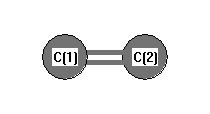
| C1 |
0.000 |
0.000 |
0.620 |
| C2 |
0.000 |
0.000 |
-0.620 |
Atom - Atom Distances (Å)
 More geometry information
Electronic energy levels
Charges, Dipole, Quadrupole and Polarizability
Charges from optimized geometry at HF/Def2TZVPP
Charges (e)
| Number |
Element |
Mulliken |
CHELPG |
AIM |
ESP |
| 1 |
C |
0.000 |
|
|
|
| 2 |
C |
0.000 |
|
|
|
Electric dipole moments
Electric dipole components in Debye
(What's a Debye? See section
VII.A.3)
| |
x |
y |
z |
Total |
| |
0.000 |
0.000 |
0.000 |
0.000 |
| CHELPG |
|
|
|
|
| AIM |
|
|
|
|
| ESP |
|
|
|
|
Electric Quadrupole moment
Quadrupole components in D Å
| Primitive |
|---|
| | x | y | z |
|---|
| x |
-12.601 |
0.000 |
0.000 |
| y |
0.000 |
-12.601 |
0.000 |
| z |
0.000 |
0.000 |
-8.904 |
|
| Traceless |
|---|
| | x | y | z |
|---|
| x |
-1.848 |
0.000 |
0.000 |
| y |
0.000 |
-1.848 |
0.000 |
| z |
0.000 |
0.000 |
3.696 |
|
| Polar |
|---|
| 3z2-r2 | 7.393 |
|---|
| x2-y2 | 0.000 |
|---|
| xy | 0.000 |
|---|
| xz | 0.000 |
|---|
| yz | 0.000 |
|---|
|
Polarizabilities
Components of the polarizability tensor.
Units are
Å
3 (Angstrom cubed)
Change units.
| |
x |
y |
z |
| x |
-0.635 |
0.000 |
0.000 |
| y |
0.000 |
-0.635 |
0.000 |
| z |
0.000 |
0.000 |
6.605 |
<r2> (average value of r
2) Å
2
| <r2> |
11.711 |
| (<r2>)1/2 |
3.422 |
Jump to
S1C1
S3C1
S4C1
Energy calculated at HF/Def2TZVPP
| | hartrees |
|---|
| Energy at 0K | -75.499322 |
| Energy at 298.15K | -75.496295 |
| HF Energy | -75.499322 |
| Nuclear repulsion energy | 14.809533 |
The energy at 298.15K was derived from the energy at 0K
and an integrated heat capacity that used the calculated vibrational frequencies.
Geometric Data calculated at HF/Def2TZVPP
Point Group is D∞h
Cartesians (Å)
| Atom |
x (Å) |
y (Å) |
z (Å) |
|---|
| C1 |
0.000 |
0.000 |
0.643 |
| C2 |
0.000 |
0.000 |
-0.643 |
Atom - Atom Distances (Å)
More geometry information
Electronic energy levels
Charges, Dipole, Quadrupole and Polarizability
Charges from optimized geometry at HF/Def2TZVPP
Charges (e)
| Number |
Element |
Mulliken |
CHELPG |
AIM |
ESP |
| 1 |
C |
0.000 |
|
|
|
| 2 |
C |
0.000 |
|
|
|
Electric dipole moments
Electric dipole components in Debye
(What's a Debye? See section
VII.A.3)
| |
x |
y |
z |
Total |
| |
0.000 |
0.000 |
0.000 |
0.000 |
| CHELPG |
|
|
|
|
| AIM |
|
|
|
|
| ESP |
|
|
|
|
Electric Quadrupole moment
Quadrupole components in D Å
| Primitive |
|---|
| | x | y | z |
|---|
| x |
-10.767 |
0.000 |
0.000 |
| y |
0.000 |
-12.874 |
0.000 |
| z |
0.000 |
0.000 |
-12.271 |
|
| Traceless |
|---|
| | x | y | z |
|---|
| x |
1.805 |
0.000 |
0.000 |
| y |
0.000 |
-1.355 |
0.000 |
| z |
0.000 |
0.000 |
-0.450 |
|
| Polar |
|---|
| 3z2-r2 | -0.900 |
|---|
| x2-y2 | 2.107 |
|---|
| xy | 0.000 |
|---|
| xz | 0.000 |
|---|
| yz | 0.000 |
|---|
|
Polarizabilities
Components of the polarizability tensor.
Units are
Å
3 (Angstrom cubed)
Change units.
| |
x |
y |
z |
| x |
2.024 |
0.000 |
0.000 |
| y |
0.000 |
0.800 |
0.000 |
| z |
0.000 |
0.000 |
1.951 |
<r2> (average value of r
2) Å
2
| <r2> |
12.441 |
| (<r2>)1/2 |
3.527 |
Jump to
S1C1
S2C1
S4C1
Energy calculated at HF/Def2TZVPP
| | hartrees |
|---|
| Energy at 0K | -75.499322 |
| Energy at 298.15K | -75.496295 |
| HF Energy | -75.499322 |
| Nuclear repulsion energy | 14.809533 |
The energy at 298.15K was derived from the energy at 0K
and an integrated heat capacity that used the calculated vibrational frequencies.
Vibrational Frequencies calculated at HF/Def2TZVPP
Geometric Data calculated at HF/Def2TZVPP
Point Group is D∞h
Electronic energy levels
Charges, Dipole, Quadrupole and Polarizability
Jump to
S1C1
S2C1
S3C1
Energy calculated at HF/Def2TZVPP
| | hartrees |
|---|
| Energy at 0K | -75.403591 |
| Energy at 298.15K | -75.400565 |
| HF Energy | -75.403591 |
| Nuclear repulsion energy | 15.366313 |
The energy at 298.15K was derived from the energy at 0K
and an integrated heat capacity that used the calculated vibrational frequencies.
Geometric Data calculated at HF/Def2TZVPP
Point Group is D∞h
Cartesians (Å)
| Atom |
x (Å) |
y (Å) |
z (Å) |
|---|
| C1 |
0.000 |
0.000 |
0.619 |
| C2 |
0.000 |
0.000 |
-0.619 |
Atom - Atom Distances (Å)
More geometry information
Electronic energy levels
Charges, Dipole, Quadrupole and Polarizability
Charges from optimized geometry at HF/Def2TZVPP
Charges (e)
| Number |
Element |
Mulliken |
CHELPG |
AIM |
ESP |
| 1 |
C |
0.000 |
|
|
|
| 2 |
C |
0.000 |
|
|
|
Electric dipole moments
Electric dipole components in Debye
(What's a Debye? See section
VII.A.3)
| |
x |
y |
z |
Total |
| |
0.000 |
0.000 |
0.000 |
0.000 |
| CHELPG |
|
|
|
|
| AIM |
|
|
|
|
| ESP |
|
|
|
|
Electric Quadrupole moment
Quadrupole components in D Å
| Primitive |
|---|
| | x | y | z |
|---|
| x |
-12.601 |
0.000 |
0.000 |
| y |
0.000 |
-12.601 |
0.000 |
| z |
0.000 |
0.000 |
-8.904 |
|
| Traceless |
|---|
| | x | y | z |
|---|
| x |
-1.848 |
0.000 |
0.000 |
| y |
0.000 |
-1.848 |
0.000 |
| z |
0.000 |
0.000 |
3.697 |
|
| Polar |
|---|
| 3z2-r2 | 7.393 |
|---|
| x2-y2 | 0.000 |
|---|
| xy | 0.000 |
|---|
| xz | 0.000 |
|---|
| yz | 0.000 |
|---|
|
Polarizabilities
Components of the polarizability tensor.
Units are
Å
3 (Angstrom cubed)
Change units.
| |
x |
y |
z |
| x |
-0.634 |
0.000 |
0.000 |
| y |
0.000 |
-0.634 |
0.000 |
| z |
0.000 |
0.000 |
6.605 |
<r2> (average value of r
2) Å
2
| <r2> |
11.711 |
| (<r2>)1/2 |
3.422 |
